Showing posts with label Yoruba. Show all posts

Thursday, February 5, 2026

Nollywood Has A Critical Diversity Problem


Nollywood Has A Critical Diversity Problem

2026 will be a century of filmmaking in Nigeria since the first feature film, "Palaver: A Romance of Northern Nigeria"  was shot in the kingdom of Toro in 1926 by the English filmmaker and military officer, Geoffrey Barkas.
The making of "Palaver" has been published in the second edition of my NOLLYWOOD MIRROR® Series
in 2014 and the publication is distributed by Amazon, Barnes and Noble and other booksellers.

Nollywood, the first indie film industry in Africa is known as the second largest in the world after the Bollywood of India in the quantity of film productions which are mostly videos and not on celluloid. And the phenomenal guerilla filmmakers have attracted global attention to the Nigerian film industry with many articles, essays, news reports and several books written by Nigerians and foreigners in the news media and academic institutions. And documentary films have been produced on the phenomenon of Nollywood.

Majority of the writers and documentary filmmakers have focused on the most dominant features of Nollywood and Kannywood which are largely dictated by the three major tribes of Igbo, Yoruba and Hausa in Nigeria.

Majority of the actors and producers are from the three tribes and so their movies have been based on the narratives and perspectives on the sociocultural, socioeconomic and sociopolitical themes of their ethnicities. 
The few filmmakers from the minor tribes have been able to represent their regions and tell their own peculiar stories. But most of the peculiarities of their tribes have not been shown in Nigerian movies.

One of the most accomplished and prolific filmmakers is Lancelot Oduwa Imasuen from Benin in Edo State and has been the leading storyteller of the lives and times of Edo people and the foremost film studies scholar on Nigerian movies in indigenous languages,  Prof. Osakue Stevenson Omoera has studied and written on Imasuen's movies.
See "Audience Reception of the Benin Language Video Film in Nollywood" by Prof. Osakue Stevenson Omoera
Journal of African Cultural Studies
Vol. 26, No. 1 (March 2014), pp. 69-81 (13 pages)
Published By: Taylor & Francis, Ltd.

I am still waiting for the best film productions of Imasuen that will show the rest of the world the great myths and mysteries of the great Edo people of the Benin Empire such as an epic film on  Prince Ekaladerhan, whom the Ife people now called Oduduwa.

We have epics of Yoruba stories in Nollywood, but the filmmakers have often forgotten that the minority group of Nupe people can't be ignored in the historical films on Oyo Empire, because the demigod, "Sango", the third Alaafin of Oyo was born to an Oyo father (Oranmiyan) and a Nupe mother, who was the daughter of the Elempe (Nupe king). He is considered half-Yoruba and half-Nupe, having spent part of his youth in Nupe kingdom before becoming a powerful Oyo ruler known for wielding fire. 
Nupe people have been underrepresented in both Nollywood and in Kennywood, even though they are mostly Muslims.


See the cinematic image of a Nupe cavalryman wearing lifidi (padded armour). Drawn in 1911 by Carl Arriens.
This is enough evidence that Nupe must have great untold stories that will captivate the cinema.

Among the most popular actors and actresses are personalities from the minorities like Nollywood divas Kate Henshaw, Ini Edo, Nse Ikpe-Etim and Mercy Johnson Okojie. But they have been featuring in Nollywood English movies often focused on common themes of the lives of Igbos and Yorubas and not on their own tribes who are lagging behind in the shadows of the major tribes.


Mercy Johnson-Okojie


Mercy Johnson-Okojie produced the Igala epic "The Legend of Inikpi" in 2020. But she has ignored telling the peculiar stories of her Ebira tribe of Kogi State. 

The popular actor, Efa Iwara has not told us any of the stories of his Yakö people in the Yakurr Local Government Area of Cross River State.

The diversity problem goes beyond tribal bigotry in the competition for leading roles for the principal cast in movies. 
There have been complaints of tribal discrimination against actors from ethnic minority groups in Nigeria.
They have been denied special roles in preference for actors from the major tribes who have the largest audiences of movie-goers at the cinemas and largest viewers of both public and cable TV channels and majority of the  viewers of videos streaming on YouTube channels, Netflix, Facebook, Instagram and other online platforms. So, the producers say their choice of the actors is based on popularity of the star power of an influential actor or actress and not based on tribal preference. 


A woman viewing two Nollywood actresses, Nunnsi Ojong and Celina Ideh from a minority group in southern Nigeria featured in my Lagos in Motion documentary film.


A scene from my "Lagos in Motion documentary film showing an Igbo actress Cynthia Agu and an Edo actress, Franca Aide.

Lest we forget, we are the best storytellers of our own stories and our stories are best told in our own languages.
We can't call the Nigerian film industry Nollywood when millions of people from the ethnic  minorities have been ignored and marginalized among the stakeholders. 

The estimated population of Nigeria is over 236,747,130 of which 30% are Hausa; 15.5% are Yoruba; 15.2% are Igbo; 6% are Fulani;. 2.4% are Tiv; 2.4% are Kanuri; 1.8% are Ibibio and Efik; 1.8% are Ijaw and 24.7% are from the remaining minorities of the over 250 ethnic groups in Nigeria, the most populous country in Africa.

While 29.5% (Hausa-Fulani), 20.3% (Yoruba), and 16.6% (Igbo) were historically listed as major, this leaves roughly a third or more of the population as part of various minority groups. 

The Diversity Problem of Different Sexual Orientations 

The other cases of lack of diversity and inclusion In Nollywood and the Nigerian film industry come from sections of the society with people profiled as Lesbian, Gay, Bisexual, and Transgender (LGBT) and the larger community of the LGBTQ (Lesbian, Gay, Bisexual, Transgender, and Queer).

There have been cases of widespread LGBTQ+-phobia; prejudice, fear, hatred, or discrimination against people based on their sexual orientation, gender identity, or expression, encompassing homophobia, biphobia, and transphobia. 
The causes of LGBTQ+phobia are often religious beliefs and traditional taboos.

The largest dominant religions of Christianity in Nollywood and Islam in Kannywood forbid homosexuality and in extreme cases of intolerance, homosexuals have been attacked and banished from film productions and treated as outcasts in the society.
Homosexuality is a crime in Nigeria. Therefore, the film industry does not accept a community of people with diverse sexual orientations and gender identities. And so will not promote
inclusivity, covering individuals who are not heterosexual or do not identify with the sex they were assigned at birth. But they cannot be ignored.
They have the fundamental human rights to tell their stories and amplify their voices in Nollywood and Kannywood and WE MUST PROTECT THEM from the violations of their liberties as bonafide citizens of Nigeria and fellow humans with the same equal rights to live and work in love 💕, peace and unity. 

Diversity and inclusion will accommodate the best talents and accelerate the sustainable development and advancement of the entertainment industry and the creative economy of Nigeria.

Key Components of a Diversity Problem

Unconscious Bias & Stereotyping: 
Prejudiced, automatic assumptions that affect hiring, promotion, and daily interactions.
Underrepresentation (The "Glass Ceiling"): A lack of diverse talent in top-level leadership roles, often due to systemic barriers.

Lack of Inclusion
Having a diverse staff but failing to create a welcoming environment where those individuals feel valued and supported.

Cultural Clashes & Communication Barriers: 
Misunderstandings due to differences in cultural norms, communication styles, and values.

Inequitable Treatment
Unequal pay, limited opportunities for advancement, or exclusion from key projects based on social identity. 

Consequences of Unaddressed Diversity Problems
Reduced Innovation: 
A homogenous group fails to bring diverse perspectives to problem-solving.

Lower Productivity & Morale: Cultural clashes and unfairness increase employee turnover and decrease productivity.

Reputational Damage: 
Organizations may face negative public perception if they appear non-inclusive. 

A diversity problem is generally solved by defining specific, unique challenges rather than taking a one-size-fits-all approach to inclusion. 

- By Ekenyerengozi Michael Chima,
The Founder/ CEO,
International Digital Post Network Limited,
Screen Outdoor Open Air Cinema (SOOAC)
New Nigeria
Tel: +234 706 637 9246

PS:
Ekenyerengozi Michael Chima (also known by the pseudonym Orikinla Osinachi) is a prominent Nigerian writer, publisher, and multimedia producer born on January 30, 1963, in Lagos Island. 

Professional Roles & Media Presence
He is the Founder and CEO of the International Digital Post Network Limited, the first Nigerian company to attract the IMAX Corporation to Nigeria, King of Kings Books International and Screen Outdoor Open Air Cinema (SOOAC). He secured International partnership with the Cinewav of Singapore for the "One Village, One Cinema" initiative and partnership with the 
International Chamber of Media & Entertainment Industry (ICMEI) of India for the Bollywood To Nollywood Filmmaking workshops for international co-productions between India and Nigeria.

Writer & Publisher
He is the Publisher/Editor of several online platforms, including Nigerians Report Online, Nigerian Times, and the Founder and Publisher/Editor of the popular NOLLYWOOD MIRROR® Series on Nollywood and the Nigerian film industry.

Consultant
He has served as a social media consultant and previously worked as a National Program Consultant for UNICEF Nigeria and independent Production Manager of "Money Wise" business magazine programme on DBN TV.

Advocacy
He is recognized for his advocacy for girl-child education supporting the compulsory education of the millions of underprivileged girls out of school in Nigeria.

Art, Literary & Creative Works
Chima is a notable artist with local and International exhibitions of his drawings and paintings. He  was the national curator for the 1993 World AIDS Day "Art Against AIDS" exhibitions at the National Museum and National Theatre in Nigeria.
He is a prolific writer who is the author of numerous books spanning fiction, poetry, and historical commentary: 
Books
He published his first book, Children of Heaven, in 1987.
His notable titles include Bye, Bye Mugabe, a collection of short stories; collections of his poems in Children of Heaven, The Prophet Lied and Scarlet Tears of London;  The Victory of Muhammadu Buhari and the Nigerian Dream on the 2015 presidential election in Nigeria, In the House of Dogs and Diary of the Memory Keeper.

Prizes
Chima won the first prize in the national essay competition on What I Like Best in Nigeria organized by the Pop magazine in 1976.
His poem "Song of Patriotism" won the first prize in a national poetry competition on the Nigerian Television Authority (NTA) in 1987.
His poem, "Empty Shells in Our Oil  Wells" was one of the finalists for the 2000 Music Society of Nigeria national poetry award.
His short story, "One Day at Obalende Bus Stop" won the third prize in the 2002 Lire en fête short story competition organized by the French Cultural Centre in Nigeria.

Early Success
He directed his first play at age 17 and at 18 he became the youngest independent professional scriptwriter for TV in Africa, writing episodes for the puppet drama series of the Nigerian Television Authority (NTA), the largest TV network on the continent from 1981-84. See 
Nigeria: 'I Started Writing Professionally At 18' - allAfrica.com
https://allafrica.com/stories/201212030437.html

Visual Media
In 2016, he produced the photo album LAGOS in MOTION, documenting Africa's largest megacity from the principal photography of his first long documentary film project, "Lagos in Motion: Sights and Sounds of Africa's Largest Megacity".

Education & Affiliations
Education: He attended St. Gregory's College, Lagos, and later had further education from seminars and workshops by the Nigerian Television Authority (NTA) in 1980, Book Development Council of Nigeria in 1982, Johns Hopkins University's Population Communication Services (JHU/PCS) in 1984 and 1990,  PATH in 1985, UNICEF in Nigeria in 1988, World Health Organization (WHO) in 1993 and other organizations.

Memberships
He has been a member of the Association of Nigerian Authors (ANA) since 1987, the Chautauqua Literary and Scientific Circle (CLSC), Digital Cinema Society (DCS), International Law Office (ILO) and Online News Association (ONA). He participated in the Digital Media Law Project (DMLP), a major initiative based at Harvard University's Berkman Klein Center for Internet & Society. Originally founded in 2007 as the "Citizen Media Law Project," it provided legal resources and education for independent journalists and online media

Chima’s work often bridges the gap between sociocultural analysis and political documentation.

Focus on Nollywood
As a major stakeholder in the Nigerian film industry, Chima has documented its evolution through the NOLLYWOOD MIRROR® Series: This is a comprehensive book series—available in print and digital formats—designed to capture the "big picture" of the industry for a global audience.
The First Edition celebrates Nollywood's icons, its emergence as an African phenomenon, and its strategy for breaking into global markets.
The Second Edition highlights "New Nollywood" developments (circa 2014), including the epic Invasion 1897, the evolution of digital filmmaking, and the first Hollywood star from Nigeria, Orlando Martins.

Film Festivals
He is the Founder and Festival Director of the annual Eko International Film Festival and Zenith International Film Festival.

Political Commentaries
His political writings focus on pivotal moments in Nigeria's democratic history:
The Victory of Muhammadu Buhari and the Nigerian Dream: This book serves as a personal testimony and historical chronicle of the 2015 presidential election. It analyzes the principal actors behind the first time an incumbent president was defeated in Nigeria’s history.

Digital & Periodical Analysis: Through his platforms Nigerians Report Online and Nigerian Times, he provides ongoing commentary on Nigerian federalism, social justice, and leadership.

Satirical Critique: 
Works like Bye, Bye Mugabe use short stories to offer a broader critique of African leadership and political dynamics beyond just Nigeria. 


Thursday, November 2, 2023

Oju Orun : Eye of Heaven


Oju Ọrun

Eye of Heaven

By Ekenyerengozi MichaeI Chima

Oju Ọrun is the title of my Yoruba epic film project I have in my creative projects file.

Ǹjẹ́ ohun kan wà lórí ilẹ̀ ayé tí ojú ọ̀run kò lè rí?

Is there anything on Earth that the eye of heaven cannot see?
 
The artwork on art canvas, digital art and NFT are available for private and public art collection and exhibition.

Artwork:
By Ekenyerengozi MichaeI Chima
© All rights reserved. No copying, duplication and reproduction in any format of media without the authorization and permission of Ekenyerengozi Michael Chima and International Digital Post Network Limited.

 Title and text:
By Ekenyerengozi MichaeI Chima
© All rights reserved. No copying, duplication and reproduction in any format of media without the authorization and permission of Ekenyerengozi Michael Chima and International Digital Post Network Limited.


Friday, September 8, 2023

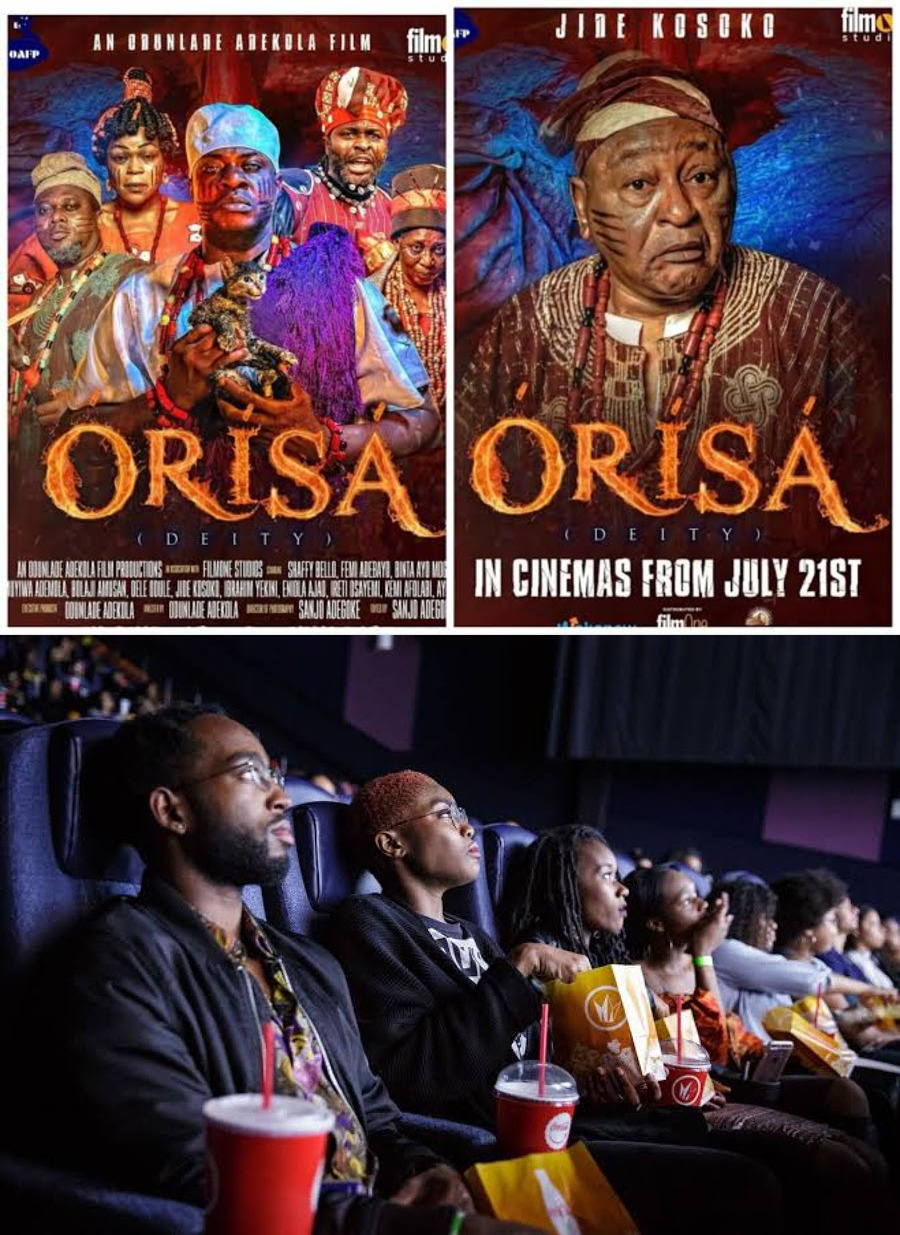
The Largest Market For Yoruba Epic Movie, "Orisa" is in Brazil and Not in Nigeria

The Largest Market For Yoruba Epic Movie, "Orisa" is in Brazil and Not in Nigeria


The Yoruba epic movies, "Orisa" and "Jagun Jagun", are the biggest Nollywood movies so far in 2023.
These epic movies can attract more people beyond Nigeria. But 
the producers don't know how to promote them globally. 
They are fixated on Netflix or Amazon Prime Video and the  cinemas in Nigeria. But the largest audiences for them are outside Nigeria. 

Over 10 million Afro Latinos in the Americas with Yoruba lineage have enough disposable incomes to watch the movies in cinemas and on cable TV channels.
In Brazil alone, millions of people will rush to watch "Orisa". 
The producers have to see the Big Picture in international film distribution and exhibition.

FilmOne Entertainment has tried with the theatrical release of "Orisa" in the United States of America, showing at selected Regal theaters. But we must see the Big Picture of the future of Nollywood in the world and the future begins today and is in our hands.

The Africans in the Diaspora have a population of over 350 million people and as a country will be the third largest in population in the world after China and India.

Countries with significant populations of Africans in the Diaspora:
United States
46,936,733
Brazil
14,517,961
Haiti
8,583,759
Colombia
4,671,160
Jamaica
2,700,000
Venezuela
2,641,481
Mexico
1,386,556
Canada
1,300,540
Ecuador
1,200,000
Cuba
1,034,044
Dominican Republic
1,029,535

Africans in the Diaspora remit more than USD 65 billion to Africa annually, more than the total foreign aid by the IMF and other international organizations to the continent in the last five years.

Why is Brazil the Largest Market For "Orisa" and "Jagun Jagun"?


There are over 14 million Africans in the Diaspora in Brazil and majority of them are traditional devotees and those who are fully informed on the widespread Yoruba Orisa religion and culture since the transatlantic slave trade to date. 
They have popular annual Orisa festivities attracting millions of Brazilians and thousands of tourists from other countries.
Their history is common public knowledge.

The film industry of Brazil is bigger than the film industry of Nigeria having millions of moviegoers with GDP per capita of $8,918 USD in 2022, a 15.86% increase from 2021. 
The GDP per capita in Nigeria was $2,448 in 2022 and with the removal of fuel subsidy in 2023, it has decreased and shown in the decreasing box office revenues, because majority of the moviegoers cannot afford to pay for the tickets again
.


The Film Industry in Brazil
At the end of 2022, there were around 3.4 thousand movie theater screens in Brazil, up from over 3.2 thousand a year earlier – an annual increase of four percent. 
The number of movie tickets sold in Brazil increased by 81.7 percent between 2021 and 2022.21 Mar 2023

With 3.4 thousand screens in Brazil compared to less than 300 screens in Nigeria, the larger market of moviegoers is Brazil.

Film distributors in Nigeria should  promote "Orisa" and "Jagun Jagun" through the international film festivals in Brazil and contact the film distributors in Brazil at the 2023 annual American Film Market (AFM) coming up from October 31 – November 5, in Santa Monica Beach Hotel, Santa Monica, CA, USA.


- By Ekenyerengozi Michael Chima,
The Publisher/Editor,
NOLLYWOOD MIRROR® Series
Nigeria Daily Twitter
https://twitter.com/nigeriadaily
New Nigeria on Pinterest
www.pinterest.com/nigeriansreport
https://www.amazon.com/author/ekenyerengozimichaelchima
https://www.linkedin.com/in/michaelchimaeyerengozi

Saturday, July 22, 2023

Misinformation on Nigeria and Misrepresentation of Nigerians in Hollywood Movies

Misinformation on Nigeria and Misrepresentation of Nigerians in Hollywood Movies


There have been misinformation  on Nigeria and misrepresentation of Nigerians in Hollywood movies. But it is pathetic that, Nigerian actors were paid for their misinformation and misrepresentation of Nigeria and Nigerians in such movies as "The Bourne Identity", 2002 action-thriller with Adewale Akinnuoye-Agbaje as "Nykwana Wombosi". 
No educated Nigerian Yoruba would speak with such accent and speaking the Yoruba language like a stranger from another tribe. And is Nykwana Wombosi a Yoruba name for him to speak Yoruba?

In "The Woman King" 2022 historical film about the Agojie, the all-female warriors of the kingdom of Dahomey during their wars against the Oyo Empire in 
the 1820s, there was annoying misinformation and misrepresentation of the Oyo Empire with Jimmy Odukoya as General Oba Ade Oyo in an attire 
that was not the way the soldiers of the army of the Oyo Empire dressed during that period and there was no sign of the famous calvary of the empire in "The Woman King". Showing the soldiers scampering in fear of explosions of gunpowder was ridiculous and exposed the ignorance and poor research of the producers of the film.

Misinformation and misrepresentation have done collateral damages to the history and knowledge of the facts of civilization.

- By Ekenyerengozi Michael Chima,
Publisher/Editor,
NOLLYWOOD MIRROR® Series,
First book series on Nollywood and the Nigerian film industry.

Saturday, April 8, 2023

INSIDE BIAFRA: The Documentary Film


Biafra, officially the Republic of Biafra, was a partially recognised secessionist state in West Africa that declared independence from Nigeria and existed from 1967 until 1970. Its territory consisted of the predominantly Igbo-populated Eastern Region of Nigeria. Biafra was established on 30 May 1967 by Igbo military officer and Eastern Region governor C. Odumegwu Ojukwu under his presidency, following a series of ethnic tensions and military coups after Nigerian independence in 1960 that culminated in the 1966 massacres of Igbo people and other ethnic groups living in northern Nigeria. The military of Nigeria proceeded to invade Biafra shortly after its secession, resulting in the start of the Nigerian Civil War.


From "Biafran Child" :

It was not long after the first gunshot was fired by the Federal Forces of Nigeria in 1967 that Nsukka fell and many of the students of the University of Nsukka were the first casualties as they were the vanguard of those who called for secession after the pogrom of the Ibos in the Northern regions of Nigeria.  The first gunshot marked the beginning of the internecine civil war. 

If you like, go up
If you like, go down.
Go up or down,
Jehovah knows those who are his.

The Biafran recruits and soldiers sang in Igbo, our mother tongue as they marched in rows through the village of Obolo-ugiri early in the morning.

The young recruits were clean-shaven and wearing white vests, white short knickers, and white snickers, whilst the soldiers wore their green Biafran Army camouflage uniform; all adorned with the badges of the rising sun in bright yellow colour.  There were badges on the face-caps and jackets.

The recruits carried wooden guns whilst the soldiers carried the real guns, which were rifles.

Instead of the Hausas to rule us
Let the world scatter to pieces.


Thursday, February 23, 2023

Peter Obi and the Political Realities of the 2023 Presidential Election in Nigeria

Peter Obi and the Political Realities of the 2023 Presidential Election in Nigeria

Millions of Igbos will not vote for Peter Obi, the presidential candidate of the Labour Party (LP) in the presidential election on Saturday February 25, 2023, even though he is the preferred choice of majority of Igbos among his fellow Igbo presidential candidates of the other political parties. 

Living in denial of the facts on the political realities in Nigeria is sheer stupidity. Because, these realities will determine the outcome of the presidential election. 

There are 371 ethnic groups in the most populous country in Africa; the largest of which are the Yoruba, Hausa and the Igbo. These ethnic groups consist of multiple tribes enumerating up to 371 with about 500 languages.

Majority of non-Igbos don't like Igbos; especially the non-Igbo ethnic groups in Edo State, Delta State, Rivers State, Cross River State and Akwa Ibom State, because of the wickedness of the Igbos during the Nigerian civil war from 1967-1970.

They have not forgotten their agonies under the defunct Republic of Biafra before their liberation by the victorious Nigerian Armed Forces.

Igbos Have Ruled Nigeria As President, Military Head Of State And Senate

Only those who don't know the political history of Nigeria will say that the Igbo tribe has been marginalized or deprived of the political leadership of Nigeria. Because the Igbos have had it all even before the Independence of Nigeria from the British Empire on October 1, 1960.

The Right Honourable: Nnamdi Benjamin Azikiwe was the third and first ever Nigerian Governor-General of Nigeria; the representative of the Monarch of the United Kingdom in Colonial Nigeria and the Nigerian Head of State from 16 November 1960 – 1 October 1963.

Nnamdi Benjamin Azikiwe, PC (16 November 1904 – 11 May 1996), popularly known as "Zik of Africa", was a Nigerian statesman and political leader who served as the first President of Nigeria from 1963 to 1966.

Preceded by

Position established (Elizabeth II

(as Queen of Nigeria))

Succeeded by

Johnson Aguiyi-Ironsi

3rd Governor-General of Nigeria

In office

16 November 1960 – 1 October 1963

Monarch

Elizabeth II

Preceded by

James Robertson

Succeeded by

Position abolished

1st President of the Senate of Nigeria

In office

1 January 1960 – 1 October 1960

Preceded by

Position established

Succeeded by

Chief Dennis Osadebay

Gen. Johnson Thomas Umunnakwe Aguiyi-Ironsi MVO, MBE (3 March 1924 – 29 July 1966) was the first Military Head of State of Nigeria.

The Igbos have had more Presidents of the Senate of the Federal Republic of Nigeria than any other tribe in Nigeria since 1960 to date.

Senate Presidents of Nigeria

Senate President Term Party

Nnamdi Azikiwe 1960 NCNC

Dennis Osadebay

1960–1963 NCNC

Nwafor Orizu

1963–1966 NCNC

Evan Enwerem

1999 PDP

Chuba Okadigbo

1999–2000 PDP

Anyim Pius Anyim

2000–2003 PDP

Adolphus Wabara

2003–2005 PDP

Ken Nnamani

2005–2007 PDP

The Igbos should stop all their brouhaha over the Office of the President of Nigeria. They have been more favoured in the national leadership of Nigeria than the other tribes.

There are millions of Igbos who will not vote for Peter Obi, the presidential candidate of Labour Party (LP), because of the Inter-tribal conflicts and rivalries among Igbos.

Igbos in the Delta State don't like Igbos in the south eastern states

Igbos from Abia don't like those in Imo, Enugu, Ebonyi and Anambra.

There are deep rooted ethnic rivalries among Igbos.

The 2023 presidential election is a sort of Referendum of the Igbos who want the restoration of their defunct Republic of Biafra and the Igbos who want to belong to the Federal Republic of Nigeria.

Peter Obi and Nnamdi Kanu.

It is a contest for the leadership of the Igbos between Peter Obi and the detained Nnamdi Kanu, the leader of IPOB.

True members and supporters of IPOB will not vote in the presidential election and other elections in Nigeria.

Because, it is betrayal of the mission of IPOB to participate in Nigerian elections for the sovereignty of Nigeria.

Hundreds of thousands of Igbos will not come out to vote on Saturday, February 25, because of the fear of attacks by different fringe elements of IPOB that will enforce the Sit-At-Home order declared by the Simon Ekpa-led faction of IPOB that the 2023 general elections will not take place in the South East geo-political zone of the country.

Peter Obi has not condemned the proscribed Indigenous People of Biafra (IPOB) and this has implications for his presidential ambition, because majority of Muslims and others, especially non-Igbos who are against the breakup of the Federal Republic of Nigeria will not vote for him.


Monday, August 15, 2022

Tinubu is the Most Detribalised Nigerian Presidential Candidate

Photo: Asiwaju Bola Ahmed Tinubu with Senator Rochas Okorocha, former Governor of Imo State (29 May 2011 – 29 May 2019).

Asiwaju Bola Ahmed Tinubu, the presidential candidate of the All Progressives Congress (APC) for the 2023 presidential election is the most detribalised Nigerian political leader who as the Governor of Lagos State  appointed an Igbo Christian Pastor Ben Akabueze as two terms Commissioner for Economic Planning and Budget with the Lagos State Government. 

No Igbo state governor has ever appointed any non-Igbo in such executive positions in the political history of Nigeria. Another Igbo technocrat, Engr. Joe Igbokwe, was the first person to be as appointed as the General Manager of Lagos State Infrastructure Maintenance & Regulatory Agency by the Tinubu led administion . He was later appointed as the pioneer Chairman of Wharf Landing Fees Collecting Authority, WLFCA in Apapa.

#Tinubu

#Lagos

#Commissioner

#Igbos

#Yorubas

#NIgeria

Find out how much Asiwaju Bola Ahmed Tinubu did for the political success of President Muhammadu Buhari, GCFR in the "The Victory of Muhammadu Buhari and the Nigerian Dream: My Eyewitness Account of the 2015 Presidential Election" distributed by Amazon, Barnes and Noble and other booksellers worldwide.

https://www.amazon.com/author/ekenyerengozimichaelchima.


Wednesday, August 10, 2022

Peter Obi and the Demographics of Nigerian Politics

Peter Obi, the presidential candidate of the dysfunctional Labour Party (LP) and his "Obidients" are currently the most popular Nigerians on the internet and many of the "Obidients" have become cyber bullies on Twitter, Facebook and Nairaland attacking and insulting the presidential candidates of the other political parties in some of the worst derogatory terms of vitriol, including libellous defamation of the character of Asiwaju Bola Ahmed Tinubu, presidential candidate of the national ruling party, All Progressives Congress (APC).

Majority of the "Obidients" are ignorant of the nuances of intellectual discourse and ignorant of the intricacies of ethnicity in the demographics of Nigerian politics since the Independence of Nigeria on October 1, 1960 from the colonial rule of the British Empire and the consequences which caused the first Nigerian civil war between the Federal Republic of Nigeria and the secessionists Republic of Biafra in the south eastern region of the Igbo tribe from 1967-1970. Majority of the "Obidients" were born after the gruesome war.

The majority of the Igbo youths have become passionate about the restoration of Biafra as an independent sovereignty and joined the vanguard of the secessionist groups of the Movement for the Actualization of the Sovereign State of Biafra (MASSOB) and IndigenousPeople of Biafra (IPOB), because they believe the Igbo tribe will be better and greater as an independent nation. Since the civil war, nobody of the Igbo tribe has become the Head of State of Nigeria either in the military regimes or civilian administrations. They have accused the political leadership of the country by the Hausas, Fulanis and Yorubas of deliberately disallowing the Igbos from the leadership of the executive arm of the government of Nigeria.  Both the past national ruling party, People's Democratic Party (PDP) and the present national ruling party, All Progressives Congress (APC) have only chosen Yoruba and Hausa Fulani presidential candidates who became elected Presidents of Nigeria, except only Dr. Goodluck Ebele Jonathan who succeeded the late President Umaru Yar'Adua as acting President from  February 9, 2010 –  May 5, 2010 and duly elected President in the 2011 presidential election, the first person from the south-south region to become the President and Head of State of the Federal Republic of Nigeria until he was defeated in the 2015 presidential election by retired Major-General Muhammadu Buhari, the presidential candidate of the APC.

Majority of the Igbo voters voted for Jonathan, because of their ethnic relationship with his own ethnic group of the Ijaw tribe.

To majority of the Igbos, Peter Obi can become attractive to majority of the voters of Ijaw tribe and the rest of the ethnic groups in the south-south region. But they have Governor of Delta State, Ifeanyichukwu Arthur Okowa who is Ika Igbo as the running mate of Alhaji Atiku Abubakar, the presidential candidate of the PDP who they will prefer to see as the Vice President of Nigeria if they win the 2023 presidential election. 

The fact is majority of non-Igbos will not vote for Peter Obi to be elected as the President of Nigeria, because due to ingrained ethnic malice and prejudice, they don't like the Igbos who actually maltreated them during the civil war and are their political rivals in the leadership of Nigeria. 

There are over 370 ethnic groups and over 500 languages in the country. The major ethnic groups are: Hausa (25%) Yoruba (21%) Ijaw (1.8%) Igbo (18%) Ibibio (3.5%) Tiv (2.4%) Fulani (6%) Kanuri (3%) Others (19.3%).

Without the support of the majority of the non-Igbo tribes and ethnic groups, Peter Obi cannot win the presidential election in 2023.


Wednesday, July 27, 2022

“Rise” to Premiere on ESPN this August


PRESS RELEASE


“Rise” to Premiere on ESPN this August
Rise is based on the triumphant true-life story of the remarkable family that produced the first trio of brothers to become NBA champions in the history of the league

Access Multimedia Content

JOHANNESBURG, South Africa, July 27, 2022/ -- Disney+ original film based on the true story of remarkable Antetokounmpo basketball brothers; Antetokounmpo: a Nigerian surname which, according to the Yoruba people of West Africa, means “the crown has returned from overseas”

ESPN Africa announced that the Disney+ original film Rise, will have its linear premiere across the continent on ESPN (DStv218, Starsat 248) on Monday 1 August at 20:00. Directed by Akin Omotoso, Rise is based on the triumphant true-life story of the remarkable family that produced the first trio of brothers to become NBA champions in the history of the league - Giannis and Thanasis Antetokounmpo of the Milwaukee Bucks and former Los Angeles Laker Kostas Antetokounmpo.

In this powerful, uplifting film, viewers will witness how one family’s vision, determination and faith lifted them out of obscurity to launch the career of two-time MVP Giannis and his brothers, Thanasis and Kostas. Last season, Giannis and Thanasis helped bring the Bucks their first NBA championship ring in 50 years, while Kostas played for the previous season champs, the Lakers.

After immigrating to Greece from Nigeria, Vera and Charles Antetokounmpo struggled to survive and provide for their five children, while living under the daily threat of deportation. With their oldest son still in Nigeria with relatives, the couple were desperate to obtain Greek citizenship but found themselves undermined by a system that blocked them at every turn. When they weren’t selling items to tourists on the streets of Athens with the rest of the family, the brothers would play basketball with a local youth team. Latecomers to the sport, they discovered their great abilities on the basketball court and worked hard to become world-class athletes. With the help of an agent, Giannis entered the NBA Draft in 2013 in a long-shot prospect that would change not only his life but the lives of his entire family.

Newcomers Uche Agada and Ral Agada - also real-life brothers - portray young Giannis and Thanasis, with Jaden Osimuwa and Elijah Sholanke as their younger two brothers, Kostas and Alexandros (“Alex”), respectively. Dayo Okeniyi (“Emperor,” “Shades of Blue”) and Yetide Badaki (“American Gods,” “This Is Us”) play their parents, Charles and Veronica (“Vera”), with Manish Dayal as Giannis’ tenacious agent, Kevin Stefanides, and Taylor Nichols as John Hammond, general manager of the Milwaukee Bucks.

Rise is directed by Akin Omotoso (“Vaya”) and written by Arash Amel (“A Private War”), with Bernie Goldmann (“300”) producing and Giannis Antetokounmpo and Douglas S. Jones as executive producers. Co-producers are Andreas Dimitriou and Michael Foutras.

Broadcast slots

Premiere:

Monday 1 August at 20:00

Repeat broadcasts:

Tuesday 2 August at 10:45 and 18:00

Monday 8 August at 20:00

Tuesday 9 August 10:45 and 18:00

How to tune in:

ESPN: DStv 218, Starsat 248 
  • All times are stated in CAT / SAST.
  • Schedule subject to change
For updates regarding the world of American sports, fans can connect to @ESPNAfrica on Facebook, Twitter and Instagram or visit https://www.ESPN.com.
Distributed by APO Group on behalf of The Walt Disney Company.
 
For any queries, kindly contact:
Jenny Griesel
Jenny Griesel Communications
Tel 083 406 3444 / jenny@jennygriesel.co.za

About The Walt Disney Company EMEA:
The Walt Disney Company has been in Europe, Middle East and Africa (EMEA) for over 80 years and employs thousands across the region. Between Disneyland Paris and its other iconic brands, including Disney, Pixar, Marvel, Star Wars, National Geographic, 20th Century Studios and ESPN, The Walt Disney Company EMEA entertains, informs and inspires millions of consumers in more than 130 countries through the power of unparalleled storytelling. Disney+, the company’s direct-to-consumer streaming service, is currently available in 17 markets across Europe.

SOURCE
The Walt Disney Company


Saturday, July 23, 2022

Yoruba Cultural Troupe in Live Performance


Yoruba Cultural Troupe in Live Performance


Saturday evening, July 23, 2022.

Lagos, Nigeria

The celebration of the 9th birthday of Omogbolabo, aka "G-Boy", the first first born of Dr. Omoayena Odunbaku, the popular author of "OMOH" was an unforgettable evening of felicitations, thanksgivings and live cultural performance by a Yoruba troupe at the Agip Recital Hall of the Muson Centre in Onikan on the Lagos Island. The birthday party attracted hundreds of people as parents came with their children and other guests. The occasion concluded with launching of the comic book adaptation of her book by her son. For a 9-year-old, the drawings are outstanding and look as good as comics done by professional artists of Marvel Comics.


#Birthday #GBoy #Lagos #book #comics #Omoh #Marvel #music #Nigeria #Yoruba #people


Sunday, June 26, 2022

Speaking Out on #Nollywood: Majority of Yoruba Filmmakers Are Intellectual Illiterates

Speaking Out on #Nollywood: Majority of Yoruba Filmmakers Are Intellectual Illiterates

Majority of Yoruba filmmakers are intellectual illiterates and by their movies you shall know them.
They portray Yorubas as fetish and superstitious people with low IQ.
If you watch their movies, you will be scared of having relationship with Yorubas.
They are the largest producers of Juju movies in Africa.

They seem to have forgotten that Yorubas have produced great  intellectual minds; from the greatest Nigerian polymath of modern education, Bishop Samuel Ajai-Crowther to the first black Nobel Laureate in Literature, Prof. Wole Soyinka. And the most outstanding founders of tech startups that are among the Unicorns in Africa are Yorubas. But I have not seen Yoruba movies about outstanding Yoruba geniuses and technocrats of Arts, Sciences and Technology who have achieved success by their education and erudition. All I have seen in over 90 percent of Yoruba movies are fetish and superstitious people using Juju rituals to get rich quick and succeed in life.
Even some of the Yoruba movies and  series showing educated Yorubas in the modern Nigerian society have glaring shortcomings in the characterization and personification of the middle class and upper class Yorubas such as in the TV series of "Hush" of the Africa Magic channels on both DStv and GOtv.
The telenovela about romantic, economic and political lives of Bem and Arinola in fashion and politics. The personality of "Bem" acted by Richard Mofe-Damijo as one of Africa’s biggest fashion designers based in Lagos failed to show any expertise and lifestyle of a guru of the fashion industry. The producers should have studied the personalities of the leading male gurus of fashion in Africa and their knowledge of the fashion industry from Lagos to London to Paris to Milan to New York. They should have consulted Ohimai Atafo and Duro Olowu, two of the top Nigerian international fashion designers. Bem looked more like the owner of a club than owner of a top flight fashion house.
Then "Arinola" portrayed by Thelma Okoduwa as one of the state’s fastest rising politicians did not have the political knowledge and personality of any notable female politicians in south western Nigeria.


- By Ekenyerengozi Michael Chima,

Publisher/Editor, 

NOLLYWOOD MIRROR®Series 

247 Nigeria (@247nigeria) / Twitter

https://mobile.twitter.com/247nigeria

https://www.amazon.com/author/ekenyerengozimichaelchima

#BishopAjaiCrowther #WoleSoyinka #Nobelprize
#nigeria #filmmakers #africa #technology #education #dstv #success #people #tech #gotv #startups #like #fashion #fashionindustry #london #paris #founders #society #designers #Africamagic #movies #series


Friday, July 23, 2021

Yorùbá Ronu, Yorùbá Párápọ́ Yorùbá United

 #sundayigboho

#yorubas

#Yoruba

#yorubanation

#Nigeria

@officialbolatinubu

@profosinbajo

@thesamadeyemi

Yorùbá Ronu, Yorùbá Párápọ́

Yorùbá United

Ooni of Ife, Oba Enitan Ogunwusi, on Thursday formed a committee to look into the Sunday Igboho situation.


The 28-member think tank comprises prominent individuals from the South-West.


They will monitor Igboho’s arraignment in Benin Republic, the moves to extradite him to Nigeria and likely prosecution.


DAILY POST gathered that a plan of action is being mapped out.


The team is expected to provide updates to the Ooni as events unfold, offer counsels, mediate with the Yoruba Nation agitator’s legal team and interface with Nigerian and Beninese authorities.

The full list below:

1. Olugbon of Igbon, Oba Olusola Alao

2. Senator Biodun Olujimi

3. Toyin Saraki

4. Segun Awolowo

5. Doyin Okupe

6. Otunba Gbenga Daniel

7. Prince Oye Oyewumi

8. Muyiwa Ige

9. General Olu Okunnowo

10. DIG Taiwo Lakanu (rtd)

11. Sola Ebiseni, Afenifere Secretary

12. Jimi Agbaje

13. Sola Lawal

14. Debola Oluwagbayi

15. Dupe Adelaja

16. Dele Momodu

17. Senator Tolu Odebiyi

18. Dr. Olusegun Mimiko

19. Dr. Seun Obasanjo

20. Makin Soyinka

21. Dele Adesina (SAN)

22. AIG Tunji Alapinni (rtd.)

23. Reuben Abati

24. Eniola Bello

25. Bimbo Ashiru

26. Senator Tokunbo Ogunbanjo

27. Dapo Adelegan

28. Professor Akin Osuntokun

PS:

I Orikinla Totally Support The Resolution To Defend And Protect Yoruba Land From #Bandits And #Terrorists Trespassing On Yoruba Land And Killing Yoruba People.

@usinnigeria

@statedept


Thursday, July 1, 2021

Cat Arrested for Terrorism By Nigerian Soldiers

Nigerian Soldiers, Secret Police 'Arrested' Cat They Believed Sunday Igboho Turned To During Invasion Of His House —Eyewitnesses

Some of those working with Sunday Adeyemo, better known as Sunday Igboho, have narrated how gunmen in military uniform allegedly attacked the residence of the Yoruba rights activist.

SaharaReporters had reported how Ighoho’s house in the Soka area of Ibadan, Oyo state was attacked around 1am on Thursday.

At least 10 vehicles belonging to the self-styled activist, including his G-wagon, Prado SUVs, and valuable properties, furniture, and windows were destroyed.

Bullet holes were also found on the buildings in the compound while bloodstains were seen on the premises by our correspondent.

Speaking to SaharaReporters, an aide to the Ighoho who said he witnessed the incident said the attackers took away jewellery and a huge amount of cash belonging to the Yoruba activist and his family.

“Around 1am, we started hearing gunshots, there was pandemonium everywhere. Then we saw soldiers, they were dressed as if they were going for a battle. Before we knew what was happening, they started targeting places where people sleep in the house.

It was God that saved me and others, they came prepared. Only God knows how they identified Igboho’s room, they went there, took his money and jewellery. Same as that of his wife and other family members.

“They even took away his cat when they didn’t see him. They claimed it might be Ighoho that turned to the cat, so they took it away.

Source

https://www.nairaland.com/6629634/soldiers-arrest-igbohos-cat-because


Friday, April 23, 2021

Yoruba Movies, Series and Documentaries Will Attract Over 100 Million Yorubas

SANGO- The Return of the Orishas by Joshua Ojo.

Yoruba Movies, Series and Documentaries Will Attract Over 100 Million Yorubas

The Yoruba constitute about 105 million people in total in Nigeria and other countries in the world.
The Yoruba people are one of the largest ethnic groups in Africa.

Related ethnic groups include
Afro-Brazilian • Americo-Liberian • Saro people  • Sierra Leone Creole people • Tabom people • Brazilian diaspora • Yorubas and Cuban Yorubas.
80 per cent of the Cuban population are either full-blown worshippers of different Yoruba Orishas.

- By EKENYERENGOZI Michael Chima,
Publisher/Editor, 
NOLLYWOOD MIRROR®Series 
247 Nigeria (@247nigeria) / Twitter