Saturday, October 20, 2012

French Film Wins 7,000€ Prize for Best Feature at 9th African Film Festival of Cordoba

TEY (Senegal, France) by Alain Gomis won the 7,000€ Griot for Best Feature Length Narrative Film.
SYNOPSIS:
Today is the last day of Satché’s life. He knows this to be true even though he is strong and healthy. Nonetheless, Satché accepts his imminent death. He walks through the streets of his hometown, goes to the decisive places of his past: his parents’ house, his first love, the friends of his youth… It is a way for an exile who has returned to get to know his homeland again.


19 October, Cordoba, Spain – The 9th African Film Festival of Cordoba has granted 10 awards to 8 African films. The jury of “the African Dream” section for feature-length films, composed of Sylvia Perel (Argentina), Tanya Valette (Dominican Republic) and Carolyn Kamya (Uganda) has selected the winning films out of 7 films in competition, from countries such as Rwanda, Egypt, South Africa, Morocco, Algeria, Senegal and Mozambique.

1. The Griot for Best Feature Length Narrative Film, accompanied by 7,000€ and a trophy, goes to TEY (Senegal, France) by Alain Gomis for the reasons of depth, poetic fluency, and essential thematics of life and death.
 This award is granted by the organizer NGO of the festival, Al Tarab.

2. The honorary Griot for Best Director, along with a trophy, goes to KIVU RUHORAHOZA(Rwanda) director of Matiere Grise (Grey Matter) for the originality, creativity, and lucidity of his vision, as well as for having the courage to recall an individual heart wrenching moment of his nation.
3. The Griot for Best Actress, along with 2,500€, to SOUFIA ISSAMI for her role in Sur la Planche (Morocco, France, Germany) by Leila Kilani for the honesty and intensity in the composition of her character. This award is granted by the Spanish foundation Women for Africa (Mujeres por África).

4. The Griot for Best Male Actor, along with 1,500€, goes to SAUL WILLIAMS for his role inTey (Senegal, France) by Alain Gomis for his ability to carry subtle and true emotions throughout the film with an elegance and direction that still moves us. This award is granted by the Corte Inglés department store.
The jury for documentaries and short-films (respectively « On the other side of the Straits » section and « Africa in Short » section) is composed of Andres Duque (Spain-Venezuela), Ishtar Yasin (Irak-Costa Rica) and Samir Ardjoum (Algeria); the jury has selected the winning films out of 16 films from 8 countries: Algeria, Burkina Faso, Kenya, South Africa, Tunisia, Tanzania and Egypt. According to the jury, winner films are:

5. The Griot for Best Documentary, along with 3,000€ and a trophy, goes to Ganster Project(South Africa, Germany) by Teboho Edkins in that we seldom see a project in which a director risks his life to enter a society of gangsters, attains the confidence necessary to film them from the inside without prejudices, and assumes a rite of initiation for a talented filmmaker. This award is granted by the NGO in charge of organizing the festival, Al Tarab. Also, it has been decided to grant an honorable mention for the feature length documentary films category, to Bîr d’eau, a Walkmovie-Portrait d’une Rue d’alger (Algeria, Switzerland) by Djamil Beloucif for its formally attractive presentation, transformative properties, and depiction of characters and dialogue regarding urban space in an endless complexity which redefines our everyday understanding.

6. The Griot for Best Short film, along with 2,000€ and a trophy, goes to Sur la route du paradis
 (On the Route to Paradise) (Morocco, France) by Uda Benyamina, for her careful and sensible assessment of the reality that is being without papers in Europe, for appealing to emotion with open sensibility, and resistance falling into a patriarchal tone. This award and its trophy are given by the Spanish foundation Puerta Africa. And lastly, also receiving an honorable mention for a Shortfilm, is Brûleurs (Algeria, France) by Farid Bentoumi for its radical yet formal bid, simple efficiency, and comprehension of moments inseparable from poetry which would be merely dismissed in other films.
A part, les suivants prix honorifiques ont été décernés :

7. The Audience Award goes to 678 (Egypt) by Mohamed Diab.
8. The SIGNIS Award for Best Feature Length Narrative Film, along with a trophy, goes toMATIÈRE GRISE (Grey Matter) (Rwanda, Australia) by Kivu Ruhorahoza for the courage to speak out against the devastating effects of war on youth. Also, a honorable mention goes to SUR LA PLANCHE (Morocco, France, Germany) by Leila Kilani for the depiction of living conditions of young women who leave their birthplace for work in the big city and their struggle to survive. SIGNIS is the International Catholic Association of Radio and Television.

9. The Youth Jury award for the Best Short film goes to Kaa El Bir (Tunisia), by Moez Ben Hassen for the different perspectives and interpretations provided by his work and for the sensitivity in narrating a delicate subject.

10. The award Cordoba Solidaire City goes to Vol Spécial (Swaziland) by Fernand Melgar for the exceptional dramatic tension with which he presented the drama of being expelled from a country, and for his way to reflect values such as friendship and solidarity, as well as for the strength of human relations in internment centers for foreigners and their extreme living conditions. Furthermore, the jury has decided to grant a special mention to the documentary Hospedes da Noite (Mozambique, Portugal) by Licínio Azevedo, for its great artistic quality, which stresses the strength of his message : in between misery and poverty, there is the need and willingness to live, as well as the joy and fight to feel like a human being.

11. The honorary ASECAN Critic's Prize for Best Feature Length Narrative Film, and trophy, to Skoonheid (Beauty) (South Africa, France) by Oliver Hermanus for the great strength of the authorial vision which depicts a story that crudely denounces the hypocrisy of a society laden with violence. ASECAN is the acronym for the Andalusian Screenwriters Association.

12. The ASFAAN Honorary Award for Career accomplishment in African Cinema has been granted to the career cinema of African director Merzak Allouache for his cinematic trajectory which represents a life dedicated to reflecting; despite difficulty, on the socio-political reality that is Algeria over the last 40 years. ASFAAN is the acronym for the Andalusian Audiovisual Festivals Association.


FCAT, one of the biggest European festivals of African cinema, welcomes this year over 100 African filmmakers including Abderrahmane Sissako, Merzak Allouache, Nadia El Fani et Kivu Ruhorahoza. This year it features, among others, on a retrospective section on Algerian cinema, a panoramic selection of Middle East films and a special section as a tribute to filmmaker Chris Marker.

The festival was accompanied, among others, by 4th Africa Produce film co-production forum, where 11 African filmmakers competed with their projects to get funding from European producers. In this frame, filmmaker Hawa Essuman (Ghana / Kenya) has been granted a 25,000 euro fund for the development of her film Djin. The fund, granted by italian foundation lettera27 (which, in turn, in funded by Moleskine) is known as The Director’s Eye, and has been presented to the public last Sunday.

About the African Film Festival of Cordoba
The African Film Festival of Cordoba (FCAT) is an independent and competitive film festival and one of the biggest African film festivals in Europe. The festival celebrates its 9thedition between the 13th and the 20th of October in the Andalusian city of Cordoba.  
The festival -organized by NGO Al Tarab, with support, among others, of the Cordoba Town Hall, the Andalusian regional government and the Spanish Agency for International Cooperation (AECID)- has been running for a week in the city of the Mosquee with the screening of 94 films from Africa or about Africa, a forum for film professionals (FCAT Espacio Profesional), which includes a film co-production forum; also exhibitions, workshops and parallel activities for all audiences.   

Further information on www.fcat.es
Pictures of the closing ceremony available here: http://www.flickr.com/photos/mcatarifa/sets/72157631805768685/

------------------------------------------------------------
Contact the press office:
Marion Girard Cisneros
media@fcat.es
+34 608 414 702


Friday, October 19, 2012

Is China Taking Over Africa?

The dramatic - and largely unknown - rise of China's economic empire into Africa and how it will change the 21st century and impact America's role in Africa. This is the dramatic - and largely unknown - story of the rise of China's economic empire in Africa, and how it will transform geopolitics.


China has now taken Britain's place as Africa's third largest business partner. Where others only see chaos, the Chinese see opportunities. With no colonial past and no political preconditions, China is bringing investment and needed infrastructure to a continent that has been largely ignored by Western companies or nations. Travelling from Beijing to Khartoum, Algiers to Brazzaville, the authors tell the story of China's economic ventures in Africa. What they find is tantamount to a geopolitical earthquake: The possibility that China will help Africa direct its own fate and finally bring light to the so-called 'dark continent', making it a force to be reckoned with internationally.


Richard Chandler Corporation Invests in Union Bank of Nigeria


19 Oct 2012 04:08 Africa/Lagos


Richard Chandler Corporation Invests in Union Bank of Nigeria

SINGAPORE, Oct. 18, 2012/PRNewswire via African Press Organization (APO)/ -- The Richard Chandler Corporation today announced that it has invested US$112 million to support the recapitalisation of Union Bank of Nigeria by Union Global Partners Limited (UGPL) consortium. This investment equates to a 13.4% position in Union Bank of Nigeria (UBN).


Founded in 1917, UBN is one of Nigeria's most recognised and established banks, with a strong heritage and a pedigree brand. UBN has a nationwide platform of over 400 branches, approximately US$6.6 billion of total assets and approximately US$ 3.5 billion of customer deposits. UGPL has recapitalised UBN with US$ 500 million, acquiring a 65% shareholding in the bank.


Nigeria has a population of 167 million, making it the seventh most populous country in the world and Africa's largest nation. Gross domestic product is projected to grow by more than 6.5% between 2012 and 2015 - one of the fastest rates in the world. The Government has introduced effective policy measures which have stabilised the banking sector in response to the impact of the recent financial crisis in Nigeria. The banking system is poised to support and accelerate Nigeria's long-term economic growth.

Richard F. Chandler, Chairman of the Richard Chandler Corporation, remarked:


"The Richard Chandler Corporation believes in building and developing great companies which can make a significant contribution to their nation's economy. UBN has a strong heritage and brand which has attracted a stable low-cost depositor base. UBN is well positioned to allocate credit to those who need it most and use it best. This should enable businesses and entrepreneurs to flourish, supporting and accelerating Nigeria's economic growth."


Dick Kramer, Chairman of UBN remarked:


"The Richard Chandler Corporation is a globally-renowned business group, with a strong track-record of investing in and building businesses in high-growth emerging markets. UBN and UGPL highly value the strategic investment of the Richard Chandler Corporation and its passion for building great companies. Furthermore, the Richard Chandler Corporation is one of the world's leading social development groups with healthcare and education initiatives across Asia and Africa."


About the Richard Chandler Corporation


The Richard Chandler Corporation is an international business group founded by New Zealand-born entrepreneur Richard F. Chandler. The Richard Chandler Corporation builds and operates businesses in energy, consumer and financials, healthcare, and education, with operations in Asia and the Pacific, Africa, the Americas, Europe, and the Middle East. The Corporation's vision of Building Great Companies and Great Nations reflects its belief in the power of business to drive national prosperity. In all its work, the Corporation places a special emphasis on good corporate governance as a crucial element of business sustainability and increasing stakeholder value. More information about the Richard Chandler Corporation is available on its website at www.richardchandler.com.


About Union Bank of Nigeria


Union Bank of Nigeria (UBN) was established in 1917 as Colonial Bank, and acquired by Barclays Bank in 1925. The bank listed on the Nigerian Stock Exchange in 1971. In 1972, twelve years after Nigeria's independence from Britain, the Federal Government of Nigeria (FGN) acquired a 51% stake in the bank. In 1979 Barclays Bank divested fully, and the bank was renamed the Union Bank of Nigeria Limited. In 1993, the FGN sold its shareholding to Nigerian individuals, making UBN a wholly private Nigerian enterprise. Today Nigeria is one of Nigeria's largest corporate and retail banks. In addition to its commercial banking activities, UBN also owns subsidiaries that are active in real estate, insurance and asset management.


Further Information


For more information, please visit: www.richardchandler.com


For media enquiries please contact:

Peter Stephens

Director of Communications & Trust

+65-6210-5555

ps@richardchandler.com

Source: Richard Chandler


Top Reports

Releases displayed in Africa/Lagos time
19 Oct 2012
13:00 L'Oréal-UNESCO for Women in Science Announces the Five Laureates of its 15th Annual Awards
11:27 L'Oréal-UNESCO Pour les Femmes et la Science dévoile les noms des 5 Lauréates de sa 15e édition
07:07 Obama Nominates Rodriguez as Next Africa Command Chief
04:12 Union Global Partners Completes its Capitalization of Union Bank of Nigeria with US$500 Million of Equity
04:08 Richard Chandler Corporation Invests in Union Bank of Nigeria
03:50 Union Global Partners Completes its Capitalization of Union Bank of Nigeria with US$500 Million of Equity
01:00 Richard Chandler Corporation Invests in Union Bank of Nigeria


UNN Professor among Winners of L'Oréal-UNESCO Women in Science Awards


Professor Francisca Nneka Okeke of the University of Nigeria, Nsukka (UNN) is among the five illustrious women scientists who will receive the 2013 Women in Science Awards and to be honoured as the 15th L'Oréal-UNESCO for Women in Science Laureates.

The following are the details of the announcement by the L'Oréal Foundation and UNESCO.

19 Oct 2012 13:00 Africa/Lagos

L'Oréal-UNESCO for Women in Science Announces the Five Laureates of its 15th Annual Awards

PARIS, October 19, 2012 /PRNewswire/ --

The L'Oréal Foundation and UNESCO today announced the five women scientists who will be honoured as the 15th L'Oréal-UNESCO For Women in Science Laureates.

The 2013 For Women in Science Awards

The research of the 2013 Laureates demonstrates exceptionally original approaches to fundamental research in the Physical Sciences, from contributing to better understanding climate change to advancing research on neurodegenerative diseases and potentially uncovering new energy sources.

The Laureates of the 2013 L'Oréal-UNESCO Awards in Physical Sciences are:

• Professor Francisca Nneka OKEKE, University of Nigeria, Nsukka (Nigeria)
For her significant contributions to the understanding of daily variations of the ion currents in the upper atmosphere which may further our understanding of climate change.

• Professor Pratibha GAI, University of York (United Kingdom)
For ingeniously modifying her electron microscope so that she was able to observe chemical reactions occurring at surface atoms of catalysts which will help scientists in their development of new medicines or new energy sources.

• Professor Reiko KURODA, Tokyo University of Science (Japan)
For discovering the functional importance of the difference between left handed and right handed molecules which has wide applications including research on neurodegenerative diseases such as Alzheimer's.

• Professor Marcia BARBOSA, Federal University of Rio Grande do Sul, Porto Alegre (Brazil)
For discovering one of the peculiarities of water which may lead to better understanding of how earthquakes occur and how proteins fold which is important for the treatment of diseases.

• Professor Deborah JIN, National Institute of Standards and Technology, and University of Colorado, Boulder (USA)
For having been the first to cool down molecules so much that she can observe chemical reactions in slow motion which may help further understanding of molecular processes which are important for medicine or new energy sources.

The Awards jury was chaired by Professor Ahmed Zewail, winner of the 1999 Nobel Prize in Chemistry, and Linus Pauling Chair Professor of Chemistry and Professor of Physics, California Institute of Technology.

"These five outstanding women scientists have given the world a better understanding of how nature works," said UNESCO Director-General Irina Bokova . "Their pioneering research and discoveries have changed the way we think in various areas of the physical sciences and opened new frontiers in science and technology. Such key developments have the potential to transform our society. Their work, their dedication, serves as an inspiration to us all."


On 28 March 2013, the five Laureates will be honoured at an Awards ceremony in Paris and will receive US$100,000 in recognition of their accomplishments.

A global programme promoting women and careers in science

"We are very proud to have changed the face of science by supporting women in science" said Jean-Paul Agon, Chairman and CEO of L'Oréal and Chairman of L'Oréal Foundation. "We are convinced that science and women bring hope and foster discovery, innovation and excellence. All the best talents must be called upon to accomplish this mission. L'Oréal believes in women, L'Oréal believes in science."

Established in 1998, the L'Oréal-UNESCO partnership is a long-term commitment to recognizing women in science and supporting scientific vocations. For Women in Science has grown into a global programme that includes International, Regional and National Fellowships and an international network of more than 1300 women in 106 countries.

Over the past 15 years, the For Women in Science Award has recognized a great diversity of scientists, 77 women working across the spectrum of research, from curing diseases to protecting the environment. Year after year, the creativity of these women in science and the importance of their findings continuously contribute to better understanding and improving the world we live in.


http://www.forwomeninscience.com

http://twitter.com/4womeninscience

Press contacts

L'Oréal
Carolyn Giang / + 33147568788 / carolyn.giang@loreal.com
http://www.forwomeninscience.com
http://twitter.com/4womeninscience

Publicis Consultants
Florence Marin / +33-1-44-82-45-17 / florence.marin@consultants.publicis.fr
Colette Genin / +33-1-44-82-45-31 / colette.genin@consultants.publicis.fr

UNESCO Press Office
Sue Williams / +33-1-45-68-17-06 / s.williams@unesco.org
http://www.unesco.org


American Christians Raise Voices Against Boko Haram


18 Oct 2012 20:30 Africa/Lagos

American Christians Raise Voices Against Boko Haram

*We Shall Stand For Our People, say pastors, leaders, professionals.

NEW YORK, Oct. 18, 2012 /PRNewswire-USNewswire/ -- Nigerian-American Christians will not sit-by idly as our brethren are being slaughtered in Nigeria by extreme and fundamental terrorists.


To this end we are addressing a press conference.

WHERE: National Press Club
WHEN: Oct 23, at 10 a.m.-next Tuesday, at the Murrow Room.

CANAN leaders, some of whom will address the conference include:

Dr. James Fadele, a retired Senior Design Engineer at Ford, now senior pastor and leader of one of the largest Christian denominations in the U.S., Redeemed Christian Church of God, North America. He is the Chairman of the association.

Ms. Oby Ezekwesili, immediate Vice President of the World Bank-Africa Region, a trustee of the association.

Laolu Akande, the longest serving Nigerian foreign correspondent in the United States and (African) at the United Nations, who is the association's Executive Director.

Emmanuel Ogebe, a religious freedom advocate, and CANAN's governmental affairs representative.

The challenge that the Boko Haram menace has thrown is that of the good fight of faith. Boko Haram is a threat not only to Nigerians, but to U.S. interests. This much the U.S. Congress have said.

CANAN will take up that challenge and use peaceful and non-violent means to fight back. Christians and innocent Nigerians of all hues have become victims of the senseless killings by the terrorist group.

But it is also a challenge to the Nigerian government, its Police Force, and other security agencies in the nation.

We also call upon the United States government and all people of goodwill around the world to pay due attention to what is happening in Nigeria, in order to defend our common humanity.

We call on the international community not to remain quiet.

We call on the U.S. government to review its present policy which falls short of correctly designating the Boko Haram as a terrorist group that it is!

As for CANAN, formed recently in New York, we shall not keep quiet, and we ask for the support of the American people.

CANAN will avail itself of its international contacts here in the U.S. and elsewhere to equip Nigerian Christians against lawlessness and the disturbingly recurrent threat to their fundamental rights.

SOURCE Christian Association of Nigerian-Americans (CANAN)

CONTACT: Laolu Akande, Executive Director, laolu@cananusa.org, +1-516-819-4355

Web Site: http://www.cananusa.org


Kenyan filmmaker Hawa Essuman Wins Director’s Eye's 25,000 Euros

Kenyan filmmaker Hawa Essuman has won the Director’s Eye, a 25,000 euro fund for film development.


In the frame of the 9th African Film Festival of Cordoba, Essuman’s film script has been granted The Director’s Eye, a film fund provided by foundation Lettera 27. On the other hand, on the 19th of October the festival winners will be revealed.


Cordoba, October 18th, 2012. The lettera27 foundation in collaboration with the African Film Festival of Cordoba-FCAT, has granted on Thursday the 18th of October, a 25,000 euro fund to a project titled Djin (The wind of destiny) from filmmaker Hawa Essuman. The Kenyan director, originally from Ghana, has already received an award this year in the International Film Festival of Durban (DIFF) for her script Logs of War. This same work has also been selected to screen in the International Documentary Festival of Amsterdam (IDFA).

The winning project has been agreed upon as the best of the seven feature length narrative scripts regarding Africa participating in the 4th Forum for African Coproduction, Africa Produces. The Fund, known as The Director's Eye, is confirmed as being allocated to the realization of Djin, a film narrating the history of a Kenyan coastal village reigned over by mythology and tradition as it experiences the arrival of modernity.

The jury which has commissioned this selection is formed by the Nigerian filmmaker Newton I. Aduaka and South African producer Steven Markowitz, who have noted "the high quality of the participating projects, with which we corroborate a bright future for African cinema". Furthermore, the members of the jury have also given special mention, one without economic endowment, to the third feature length script from Kenyan filmmaker Mira Tanna-Händel, titled Salme's Freedom.

The director of the festival, Mane Cisneros, has highlighted that the Directors Eye fund "is not only an economic endowment, but also a means by which the director will have access to support and advice at all times from both the lettera27 foundation as well as the festival. Together, these organizations will accompany Hawa Essuman from start to finish.

In addition to the economic endowment of 25,000 euros, the project will have support through the duration of the production process by means of advice, search and dissemination of sponsors, the initiation of crowd funding campaigns and social networking. Following its production; the film Djin, a result of this international coproduction, will be projected at the African Film Festival of Cordoba-FCAT as an international launch platform.

In this way, the FCAT Cordoba which is celebrated from the 13th -20th of October is configured not only as a space for the presentation and projection of films, but also as a point of interaction and dialogue between filmmakers, Spanish audiences, international producers, distributors, and fund managers with the objective or promoting coproduction.

The Forum of African Coproduction, Africa produces, which forms a part of the FCAT program's Espacio Profesional celebrates this year its fourth edition. The objective of this space is to facilitate connections between African filmmakers and European producers interested in working together.

About lettera27 and FCAT Espacio Profesional


lettera27 is a non-profit foundation, supported by Moleskine. Its mission is to support the right to literacy, education, and information while promoting access to knowledge throughout the world but especially in developing countries. FCAT Espacio Profesional is dedicated to promoting cooperation between film professionals from Africa, Spain and the rest of the world. FCAT Espacio Profesional 2012 has two main components: The 4th Africa Produces Co-production Forum, and a series of conferences and round tables which will tackle key matters such as the financing, production, distribution and exhibition of African film works.

Winner project: Djin, by Hawa Essuman (Ghana, Kenya)
Every 30 years, in a village on the coast of Kenya where mythology and tradition prevail despite modernity's attempts to penetrate, a wind blows, carrying with it a spirit: the Djin. This spirit selects people, urging them to fulfil their aspirations, at the same time eliminating doubts and ambivalences.
Hawa Essuman, born in 1980, is a Kenyan artist originally from Ghana. As an actress, producer, writer and director with a background in theatre, Essuman has experience both in documentary films and television productions as a Director.

Special mention: Salme’s freedom, by Mira Tanna-Händel (Kenya)
Zanzibar in the nineteenth century. Salme is the impulsive youngest daughter of the Sultan who tires of living in the palace. After meeting a German trader, Salme and her new partner decide to run away.
Mira Tanna-Händel was born in Kenya to Indian parents and currently lives in Berlin. She has written and directed Feature films, documentaries and short films for BBC, Channel 4, ARD, etc. Salme’s Freedom is her third feature film script.

Other works in competition for the Director’s Eye film fund:

Sweet Justice, by Ekwa Msangi-Omari (Tanzania, U.S., Kenya)
Saran returns to Kenya to bury her husband, who was killed in post-election street violence. Soon she discovers that the death of her husband wasn’t accidental, rather a murderous cover up by a network of child traffickers her husband had been investigating.

Ekwa Msangi-Omari is a Tanzanian-American filmmaker who was raised in Kenya and is now based in Brooklyn, New York. She has worked with professional initiatives like Tribecca All Access, The African Film Festival in New York and Completion Films. She has written and directed several short films, pilots and TV series.

Kiloshe, by Victoria Thomas (Sierra Leone)
Returning home to Nigeria for his sister’s wedding from Edinburgh, night club bouncer and aspiring music producer Ade inadvertently overstates his career achievements to impress his childhood friend Femi, who in turn sees an opportunity to become a reality show mogul. Victoria Thomas is an award winning comedy filmmaker from Sierra Leone. Now living in Edinburgh, Thomas is known for the founding of www.dmand.it; an audience mapping software for filmmakers. An alumni of the Berlinale talent Campus 2009, she was nominated in the BAFTA New Talent Awards in 2011 and is a visiting lecturer on the BA Creative Entrepreneurship at the Glasgow School of Art.

La batârde, by Uda Benyamina/ Malik Rumeau (Morocco, Syria, France)
La batârde tells the complicated life of Dounia, a teenager entering womanhood in the ghetto, of which she has become the queen; until she meets Lucas.
Uda Benyamina she was born in Morocco and lives in Paris. She attended several acting schools including ERAC (École Régionale d’Acteurs de Cannes), the Academy of Minsk in Belarus and the prestigious Actor’s Studio in New York. She has made several short films shown on French television.

La Bande à Salomon, by Kivu Ruhorahoza (Rwanda)
Solomon, the son of an African dictator, lives like a rock star in Paris. At the end of one of his binges, he suffers an assault and his father forces him to get a bodyguard and a sorcerer to counter the bad luck.
Kivu Ruhorahoza is an emerging young Rwandan filmmaker. The international success of his first feature film, Grey Matter (selected in FCAT Córdoba 2012) has ensured the backing for his second feature, Jomo.

About the African Film Festival of Cordoba
The African Film Festival of Cordoba-FCAT is running from the 13th - 20th of October. It is a cinematic journey through the vast African continent with nearly 100 films from 28 nations, as well as activities for film professionals, photo exhibitions, music and dance workshops. Tomorrow the 19th, the festival's palmares will be revealed.

After 8 years in the Spanish municipality of Tarifa, the festival has relocated to Cordova, also in the South of Spain. It has established itself as an annual point of reference for African cinema in Europe. Furthermore, this is the only Spanish event with competitive sections dedicated to African productions, and is one of the most important in the world.

Press office contact
Marion Girard Cisneros
media@fcat.es
+34 608 414702
www.fcat.es


Thursday, October 18, 2012

Hilary Mantel wins 2012 Man Booker Prize


Hilary Mantel wins 2012 Man Booker Prize

16 October 2012

The whittling has finished. The judges of this year's Man Booker Prize started with a daunting 145 novels and have winnowed, sifted, culled, and in some cases hurled, until there was only one left: Hilary Mantel's Bring up the Bodies.

Hers is a story unique in Man Booker history. She becomes only the third author, after Peter Carey and J.M. Coetzee, to win the prize twice, which puts her in the empyrean. But she is also the first to win with a sequel (Wolf Hall won in 2009) and the first to win with such a brief interlude between books. Her resuscitation of Thomas Cromwell – and with him the historical novel – is one of the great achievements of modern literature. There is the last volume of her trilogy still to come so her Man Booker tale may yet have a further chapter.

The writing will have to wait a bit though. She may have won before but the torrent of media interest will still knock her back as if she's been hit by a wave. In 2009 she confessed to feeling as though she were “flying through the air”, well, she's soaring again. When she lands she won't have time to think and she will talk into microphones until her throat is sore. It comes with the territory: everyone wants a bit of the Man Booker winner.

It has been a long and uniquely intense journey not just for her but for everyone associated with the prize. For the judges it has meant nine months of work, worry and pleasure. Their choices have been scrutinised and criticised and their thoughts and penchants imagined. They will have read the shortlisted books at least three times. They will await the public's verdict on their choice with sang froid mixed with curiosity. They needn't be worried, Bring Up the Bodies has had near universal praise from critics and reading public alike.

The shortlisted authors meanwhile have felt the hot brightness of the media spotlight on them since July when the long-list was first announced. They can breathe out now. For Hilary Mantel all those middle-of-the-night moments when she had to tell herself not to think of what it would be like to win again, not to jinx herself, can stop.

Indeed, spare a thought for the shortlisted authors; they will have had a day unlike any other they have known. How do you take your mind off the fact that in a matter of hours you might be the winner of arguably the world's most high-profile literary prize? Of course it is an honour and validation to be shortlisted but they will have known that at 11.30 this morning the judges closed the door of a room somewhere in London – possibly near to where they themselves were standing/shopping/chomping their nails – and settled down to decide their future. They will have wondered what that group literary holy men and women, like the conclave of cardinals in the Sistine Chapel choosing a new Pope, were talking about and wondered whether the puff of white smoke that finally emerged was for them. They may be writers but they're only human.

The nerves will have continued all through the prize dinner, even a phalanx of loved ones, publisher and agent can't keep them away. They chatted amicably, a drink – but perhaps just the one – to steady the beating heart. I doubt they tasted their food. Who would have wanted to be them as Sir Peter Stothard took to the rostrum and opened his mouth to enunciate the first syllable of the winner's name? She may qualify as an old hand but Hilary Mantel confessed that her nerves this time round were infinitely worse than in 2009.

This is not the end of the process, however. For Hilary Mantel it is the moment of coronation before she confronts the wider horizons that have suddenly opened up before her. For the other shortlisted authors who came so agonisingly close they have the knowledge that every publisher in the land will bite their hand off for the chance to publish their next book and that, whatever they write, they will have a wide and eager audience. Their names are now known to readers who may have had no idea of them only a few months ago.

Perhaps the real object of envy is not the winner – she thoroughly deserves her triumph – but the readers who have yet to open Bring Up the Bodies. They have just won a prize too.


SOURCE: THE MAN BOOKER PRIZE.


Chibuike Rotimi Amaechi @ 5 and The Health Challenges of Rivers State – The Overview of An Insider

Rivers State Governor - Rt. Hon. Chibuike Rotimi Amaechi.


CHIBUIKE ROTIMI AMAECHI @ 5 AND THE HEALTH CHALLENGES OF RIVERS STATE – AN OVERVIEW OF AN INSIDER

~ By Eze Chukwuemeka Eze

According to Daisaku Ikeda, “A great revolution in just one single individual will help achieve a change in the destiny of a society and, further, will enable a change in the destiny of humankind” while to Lewis F. Korns, “The history of the human race always has been, and most likely always will be, that of evolution and revolution”. These great minds in making their great statements must have had Rt. Hon. Chibuike Rotimi Amaechi the Executive Governor of Rivers State and Chairman of the Governors Forum in Nigeria in mind particularly the October 25th, 2007 historical Supreme Court ruling that installed him as the Governor in the stead of his cousin, Sir Celestine Omehia who was acting as Governor before this date; an incident that has brought not only change but revolution in Rivers State by any standard anybody will like to define revolution.

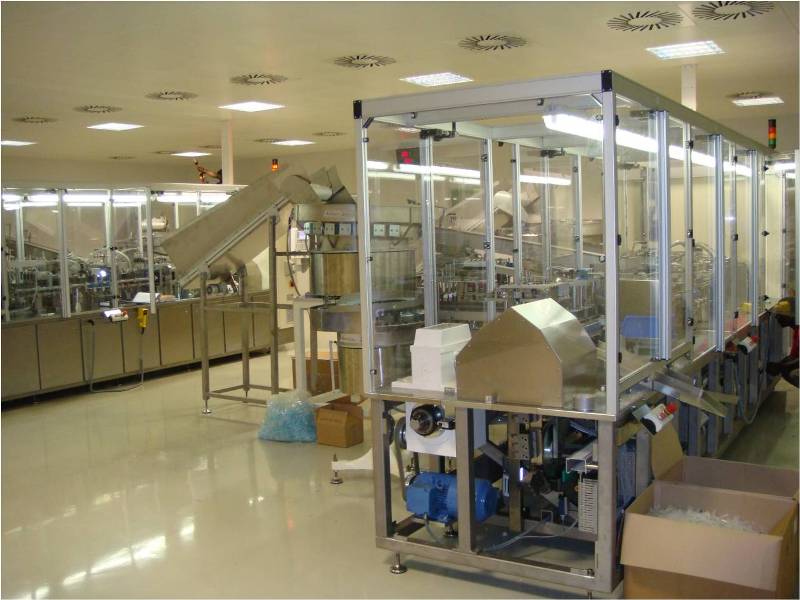
Auto-Disabled 0syringe Factory in Rivers State, Nigeria.

25th October, 2012 therefore will mark the 5th anniversary of the coming to power of Gov. Amaechi as the Executive Governor of Rivers State. Having studied events of this historical date and the administration of Gov. Amaechi this past five years and now that some critic and Cynicism’s perception and rating of the administration seems to be at its lowest ebb; it becomes imperative to critically x-ray the Health challenges and how this administration has gone in addressing some of these challenges and see if this perception is in order or not.

Dr. Sampson Parker.

Dr. Sampson Parker Commissioning one of the 60-60-60 Projects.

One Of the Machines in BMH.

In this regard,, efforts will be made to discuss the achievements and flaws if any of this administration in the area of Health in last five years under the watch of Rt. Hon. Chibuike Rotimi Amaechi. Serious step taken by his administration in tackling the sorry state and comatose health sector in the State prior to October, 2007 was setting up the Primary Healthcare Management Board and sending the Executive bill on Sustainable Development Amendment Bill No. 1 of 2008 to the State Assembly which was later passed and signed into law by the Governor.

One of the secondary hospitals.

One of the health centres.

According to Virgil, “The greatest wealth is health” and in realisation of this; The Rivers State Government under the leadership of Rt. Hon Chibuike Amaechi adopted a system of health care whose thrust is anchored on Primary Health Care with the following specific objectives: 1. Provision of quality and standard health facilities.2. Provision of efficient, effective and affordable health services. 3. Availability of well qualified and motivated staff at all health facilities.. 4. Provision of health services to vulnerable groups at government cost. 5. Preparation of the Bill for the establishment of Primary Health Care Board already implemented.

The following steps was adopted to achieve this vision

1. Re-orientation workshop for Heads of health establishments (Ministry, Hospitals, Health Units in LGA) held from 4th – 8th August, 2008 as first step.
2. Re-training 0f all categories of staff in the Health Sector of the State.
3. Recruitment of equipped staff to address the severe manpower shortage in the Health Sector.
4. Construction of Karibi-Whyte Mega Hospital at the cost of $98 million.
5. Maintenance contracts are being instituted for different equipments in the Hospitals
6. Government has embarked on massive infrastructural development all over the LGAs
7. Governor Amaechi took this up personally and met with Doctors in the State and set up a Committee on Health Policy.
8. The State government is in the process of starting the State Health Insurance Programme.

According to Jack Goldstone, “revolution is an effort to transform the political institutions and the justification for political authority in any society, accompanied by formal or informal mass mobilization and non-institutionalized actions that undermine authorities”. Without fear of contradiction, I make bold to state that if there is any Government or institution in Nigeria that aptly demonstrates these definitions of revolution that person is Rt. Hon. Rotimi Chibuike Amaechi, the action and visionary Governor of Rivers State. In supporting this assumption, I intend to highlight just the Health sector out of the many laudable achievements Rt. Hon Chibuike Amaechi is doing in Rivers State and to convince any doubting Thomas of this truism.

In Rivers State under Governor Amaechi’s watch, tremendous revolution in Health service and delivery is taking place. The State Government is offering free health services to all her citizenry in all government owned hospitals or health centres. To achieve this, Government has constructed over 160 Health Centres in all the LGAs and construction of 1000 bed specialist hospital is on the card with other special intervention programmes in this area. These facilities are available free of charge to both indigenes and none indigenes residing in the State according to Dr Sampson Parker, the Health Commissioner.

According to Ralph Waldo Emerson, “Every revolution was first a thought in one man's mind” and putting this into action and throwing more light to the ongoing revolution in the health sector in Rivers State, Rt. Hon. Chibuike Amaechi the brain behind the revolution has this to say “we have wonderful primary health care facilities. I was told by my Commissioner for Health, and it was confirmed at a meeting held with all the Doctors in the State, that you cannot have a sound secondary health care without basic foundation which is basic primary health. That is where we are mainly focused. We have the plan to build 160 primary health centres. We have completed 100 and they are functioning. The 100 that have been completed have Doctors’ quarters, nurses’ quarters and they should live there. Why I said they should live there is that I have visited those hospitals but, most of the time I have gone there, all the doctors were not found there after 4 pm.

The excuse they give is that, how many patients do we receive in a day? Maybe 10 to 20 and so what are we sitting down for? That is the excuse. But you are paid to stay there. You are hired to be there, you are not paid to be in Port-Harcourt. You are told you will live at the rural areas. There are generators attached to every hospital. Of course, there are management problems but we are addressing that. We will pay the health centre for every patient they see. We will pay the bill. So if you talk about primary health centre, we currently have a very robust primary health care. We intend to complete the 60. If possible, expand on the 160. At the secondary health care level, we are refurbishing some hospitals. The old Niger Hospital is renamed Prof. Kelsey Harrison Hospital and is completed, furnished, equipped and will soon be commissioned for public use. We are furnishing the dental hospital too. But we intend to renovate 24 of the secondary health care centres so that if anybody needs to be referred from the primary health care at least, there is one secondary health care institution in every local government you can go.

We are encouraging negotiation with people to complete the construction of one of our major hospital projects. It is supposed to be a medical tourism. Initially, the vision is to be 1,000 beds but it shows you that we were new when we had that vision because we did not ask basic questions. That is why it is good to have consultants. When we brought consultants, the basic question they asked showed that we didn’t do our work well. The first question they asked was, do you have feasibility? No sir. How do you know you need 1,000 beds? Who are the patients? What are their financial capabilities to pay for the service? How do you sustain it? So their recommendation is, out of 1,000 beds, we go for 500 beds. In fact, modern technology does not even allow a patient to stay more than one week in the hospital so if you plan for 1,000 beds and the patients stay for one week; you notice a lot of the beds will be empty so we have reduced it to 500 beds instead of the 1,000.

In fact, the early recommendation was, if you like the name 1,000, bed hospital, then establish a medical school as the Rivers State University of Science and Technology because the university is actually close to the school. Then, build 500 beds for them where they can use that as teaching hospital. If not, if I were you, the one they are building here can also act as teaching hospital to the university because it is very close to the hospital. So, we are dealing with primary health care, secondary health care and then tertiary. If we do have the money by God’s grace, we would complete the rest of primary and secondary health care and we hope that we would be able to raise a huge bond.

The man behind the conceptualisation of the revolution of Health service and delivery in Rivers State that will not only make other states in the Federation green with envy but also make the Rivers state a medical reference point in Nigeria and indeed the sub region. He also hopes to make Rivers State a Mecca of sort to anyone seeking professional medical help from any part of the world.

On if the present Administration has achieved much in the Health Sector, Dr Parker the Commissioner for Health stated, “We are about surfacing. All along, we are trying to create a solid foundation for the medical sector that what we are doing and that is why you hear us talking about primary Health Care, and the structures of the primary Health Care and all that. By the time we finish and go to the secondary and tertiary and make the enabling laws that will bring about the sustainability of this, is when we can call it success”.

The two major areas this administration is concentrating on according to Dr Parker are Health and Education; “To me, I always say this, the highest achievement of this government is nothing but re-establishment of the educational system. It is not about health, it is not about anything. My own is that, if we have achieved education, we have achieved health care. My challenges in the health sector are because of the illiterate population because they hardly understand what you are saying. But, if we achieve education in the way the Governor is going about it, pushing it, establishing it, making enabling laws to protect it for sustainability, I think the people that will come after us will benefit from it”.

On the achievements of this administration on the Health Sector, “I said that in all the things we are doing, the major thing is about primary health care system and that including the infrastructural development and the programme that make up the primary health care. That is the system and the utilization of such programmes. We have the robust HIV system and we are now the pioneer warriors against malaria. That is part of the primary care system. We have gone from what the country and Africa has been doing in the control of malaria. We have the Roll back malaria, Malaria Control Programme. We are taking the bull by the horns and said that we want to eliminate malaria. That is part of the primary health care system. We are not only eliminating Malaria and we are building a factory for it, so that there will be sustainability of this war and also provide employment. The Health sector today is about one of the foremost employers of labour in Rivers State. These are the things we have on ground. We have gone so much into the medical industry. Right now, we are about developing an area in part of the Greater Port Harcourt city, where we called the Medical Industrial Region where we have the syringe factory, the malaria diagnostic and test tube factory. So we hope to be servicing the medical industry here”.

With his reappointment into the State Executive Council in the second tenure of the government of Gov Amaechi, Dr. Sampson Parker said that his focus this time around is to improve on service delivery in the health Sector. He disclosed that about 100 medical Doctors have been employed to staff and manage most of the Health Centres in the rural areas. The Rivers State Government has currently embarked upon the exercise to eradicate malaria vectors from the State. The Health Centre at the Rivers State University of Science and Technology will soon be opened to the public. The State was lauded last year for its daily commissioning of a health centre over a 60 day period in 60 communities in its 60-60-60 initiative. The Dental Hospital located in the Garrison area of Port Harcourt will soon be opened. All of these will also generate employment amongst the youths in the State. He stated that the ongoing Malaria elimination project is not only targeted at malaria but other mosquito borne infections like dengue fever, yellow fever and filariasis. The Universal Free Medical Care programme whereby the state government is to pick the medical bills of all residents in the state is on though beneficiaries must register and urged all members of staff to register into the programme.

Dr Parker said that the existing General Hospitals will be collapsed into Six Zonal Hospitals to cater for referrals coming from the Primary Health centres, not just to reduce the work load of the BMSH but to reposition it to be more focused as a tertiary hospital.

Today in Nigeria, India stands as the medical haven and end spot when it comes to provision or rather health deilvery to Nigerians that when a simple headache happens to any of our leaders, India comes to mind. To stop this madness, Governor Amaechi in his health revolution in Nigeria has now decided to bring India to Rivers State. According to the Rivers State Governor Rotimi Amaechi, “my administration has begun talks with Indian authorities on how to establish a new medical school in the state. The collaboration is aimed at providing manpower for the school. “Once we are sure that Indians can supply us with the teachers then we will be ready to establish it. “Because it is not good to establish a medical school without qualified teachers,” he said. Amaechi said the state branch of the Nigeria Medical Association (NMA) will also contribute in providing teaching staff, pointing out that once the new college takes off, it will provide the required manpower to man the numerous health facilities being built by his administration.

The fact remains that if this is achieved then any Nigerian going to India for medical attention will be going there for a jamboree as Rivers State will be in position to provide similar services obtainable in India.

Today, Rivers State is the only State in Africa that has established a worthwhile Auto Disable Syringe factory that currently produce 160 million syringes annually based on the Rivers State health revolution, the Federal Government has banned the use of all conventional syringes in the country with effect from 1st October, 2012 and had signed a bulk purchase agreement with the Rivers State Government.

Amaechi being whom he is, always going for the best has concluded arrangement to expand this factory at a cost of 210 million Euros to be funded with equity participation between the State Government and the Export Credit Agency (ECA) of Germany and Austria. According to Dr Sampson Parker, the ECA is bringing in 85% of the funds for machinery and Equipment, while the Rivers State Government is putting in 15% for machinery and Equipment including the civil works up to the completion of the project.

Building project for the plant is expected to be completed by August 2013 while procurement and installation is to be completed within 24months of the commencement of expansion project. When the expansion of this project that will put Nigeria as a producing nation than as a consumable nation it is well known for, the plant will be producing one billion syringes, annually, one million litres of IV Solutions (drips), drip giving sets as well as one billion hypodermic needles for injections annually. One may not be shocked, if the State will not start to export some of these equipments to other African countries.

Finally, if the efforts of Rt. Hon. Chibuike Rotimi Amaechi on health delivery in Rivers State are not revolutionary then I need to be educated accordingly. And if constructing 60 Health Centres and donating them to 60 communities within 60 days is not revolutionary and world-shattering then something is wrong with me!

In celebration of the coming into power of this unassumingly but achieving leader, I intend to run series on the various areas of this administration to ascertain its success or otherwise in the last five years in saddle as the Executive Governor of Rivers State on the giant strides the administration has made in the critical areas of the state’s economy be it in Health, Education, Transport, Works, Commerce etc will be the major focus of this drive.


~ Eze Chukwuemeka Eze is a Media Consultant based in Port Harcourt.
Email: ezemediaconcept08@rocketmail.com. Tel: 08038199163.